Reflection – Week 4
This week, we learned Creating a Data Set and analyzing data.
In this class, we learned Creating a Data Set and analyzing data. Our group was assigned to Scenario 2, and the goal was to help company which works with Higher Education Institutions to gain insights into the student experience and to improve their services. Therefore, when designing the questionnaire, we focused on two core dimensions: the purpose of use (why) and the way of use (how often / how willing), in order to understand the relationship between students and generative AI tools. Our question settings aimed to capture both behavioral data, such as usage frequency and usage scenarios, and attitudinal data, such as views on academic integrity and awareness of school guidance policies.
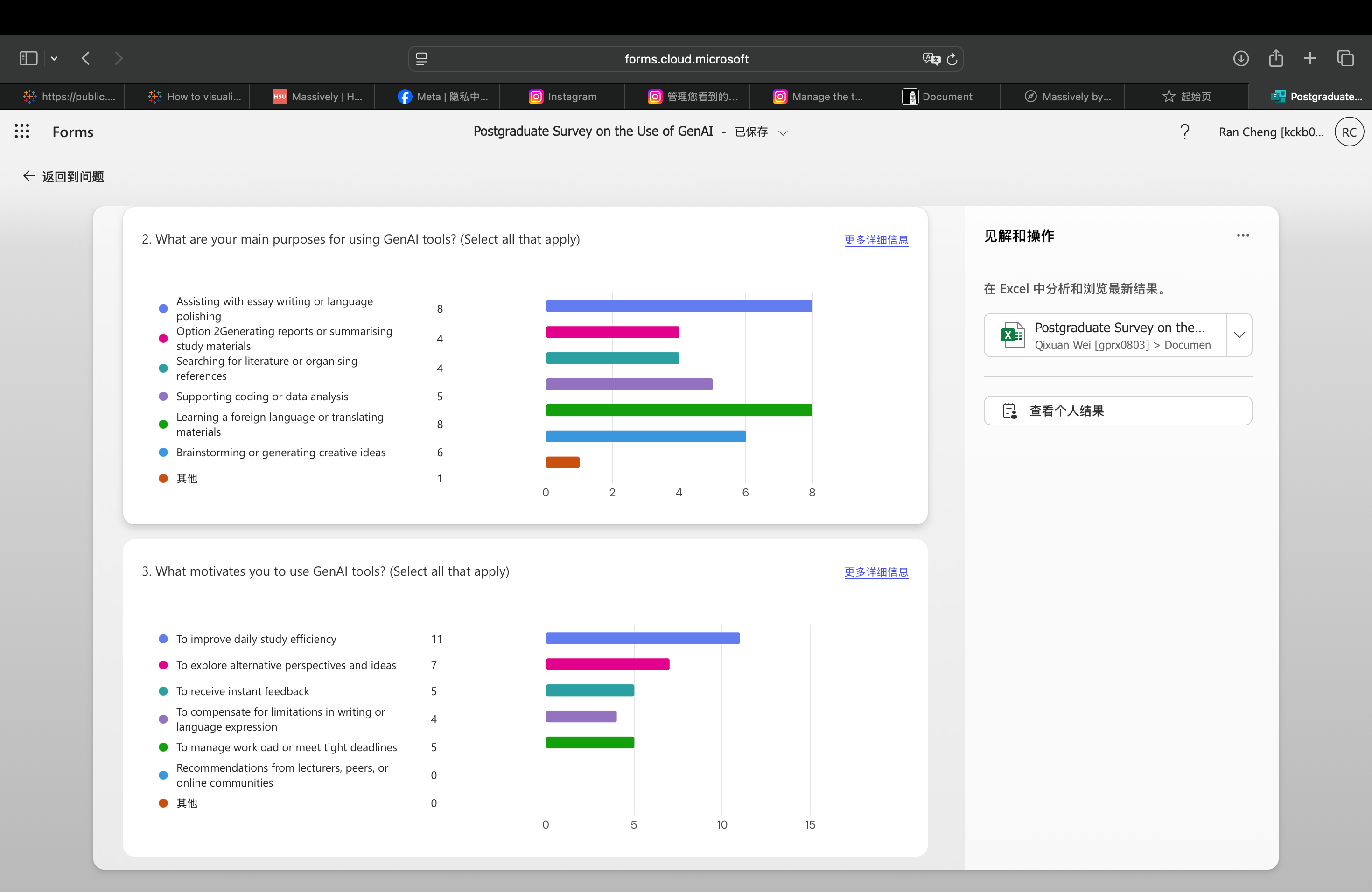
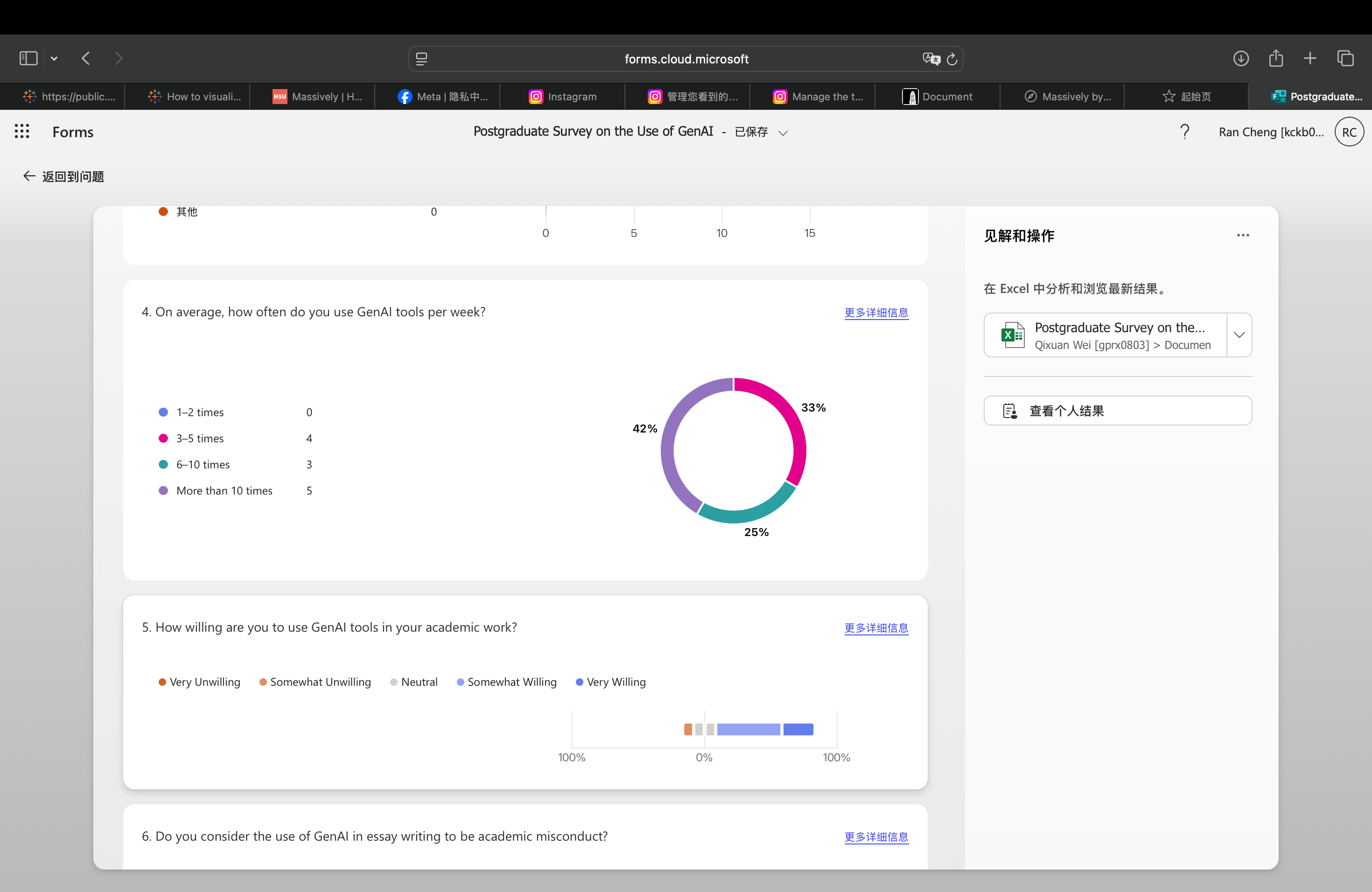
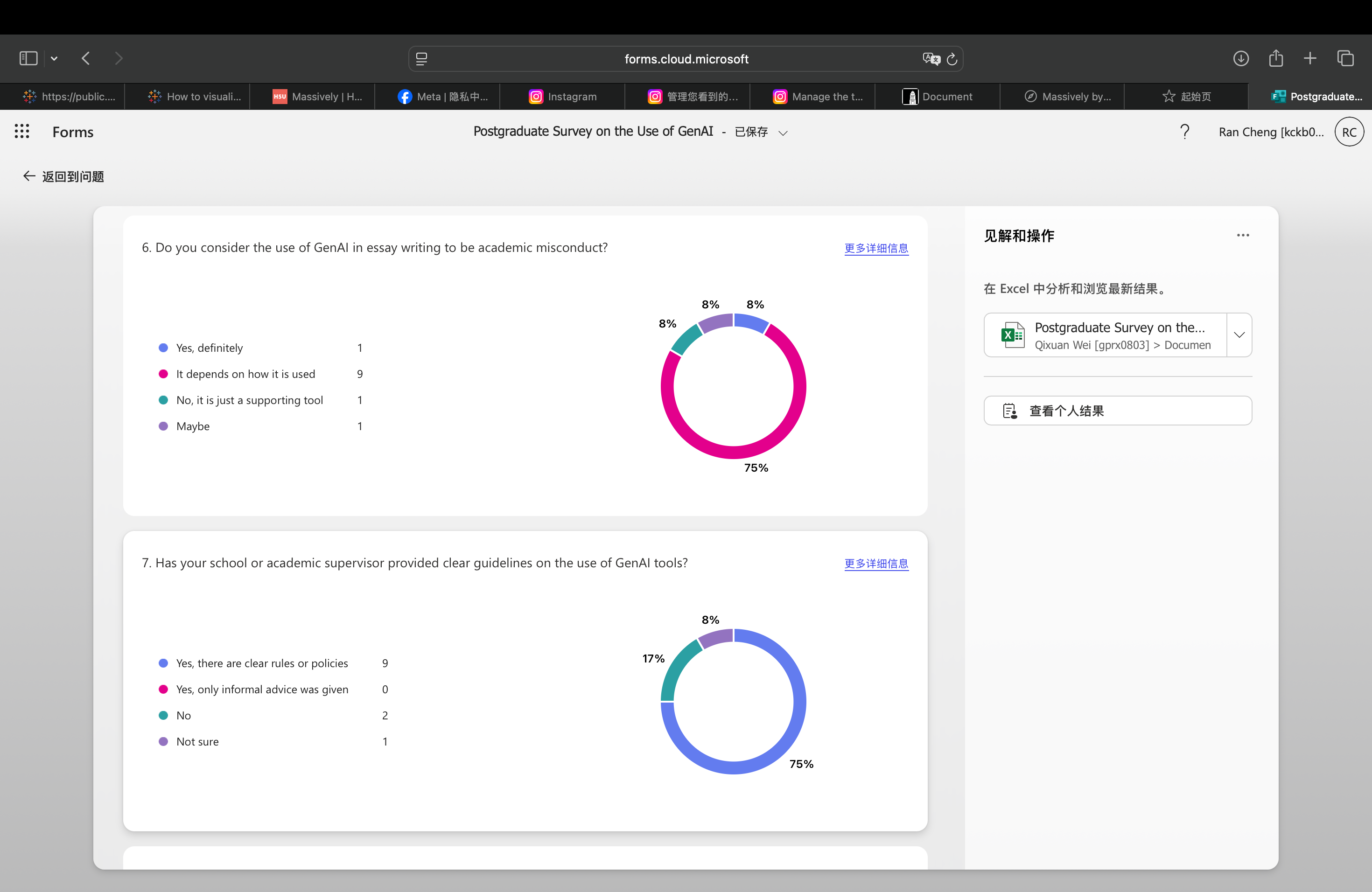
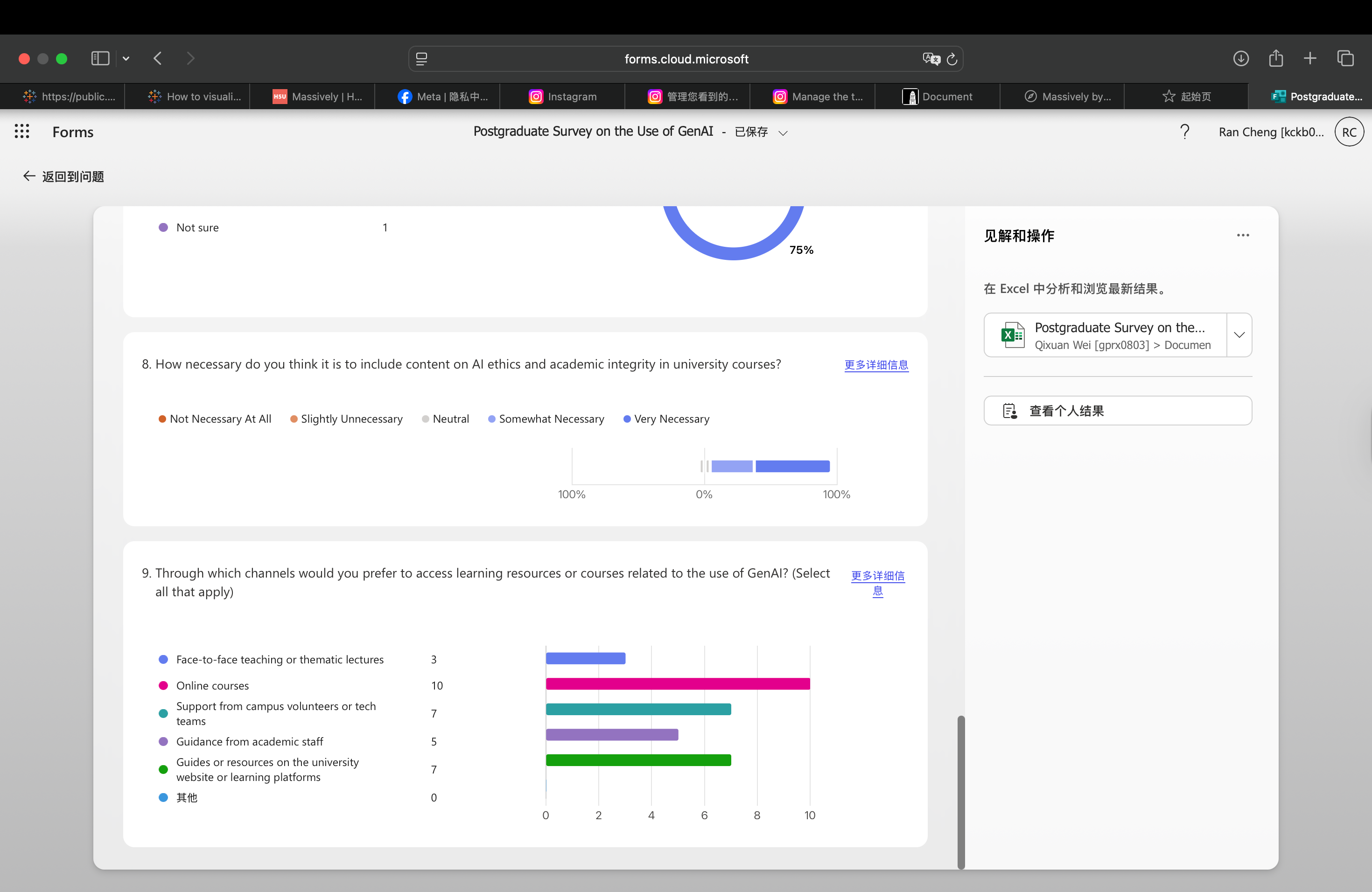
We designed this questionnaire to understand how students use generative AI in the learning process and their motivations and attitudes. The collected data presented a relatively coherent story: Students view GenAI as a learning support tool, mainly using it to enhance efficiency, gain inspiration, or solve expression difficulties, and also maintaining a certain level of vigilance regarding academic integrity issues. From a visual perspective, I think I can use bar charts to show the importance of different usage scenarios, and pie charts to present students' attitudes and frequencies. Finally, I will complete our questionnaire requirements and provide a reference for the school to offer a course on how AI can help students in their learning practices.
In the reflection required on Minerva, I also have some thoughts. The ideological role of data visualization is that it not only presents facts but also shapes how we understand those facts. Charts will tell us what to focus on through layout, sorting, comparison, and visual emphasis, so it is not a completely neutral reflection. Feminist data visualization reminds us that data is not inherently objective; it comes from specific people, environments, and power structures. Viewing our questionnaire data from this perspective, I will be more sensitive to the fact that the "student needs" we present are expressions within a specific learning context and cultural background, and have certain limitations. If we need to collect data through a formal questionnaire, we also need to make detailed optimizations.
Here are some pictures of our data.